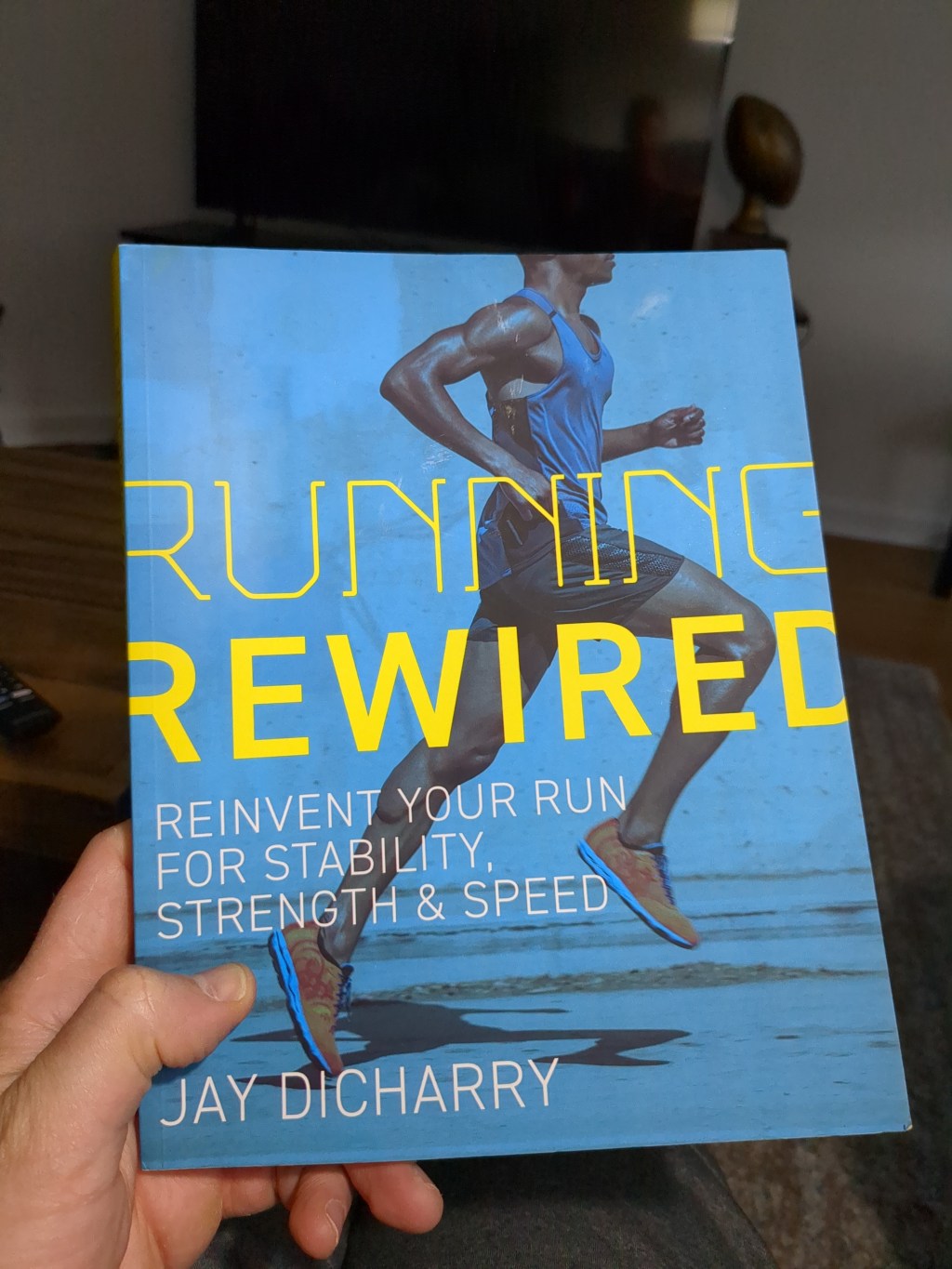
Within reading the first couple of pages Jay Dicharry seemingly was talking right to me as a runner. I’m sure that most runners have experienced what Jay describes right away in his book, everything from tight hips, sore knees, pains in your calves and the like. What he doesn’t do throughout the book is tell you that there is the “one best way to run for all runners” instead he accepts that there is a “best way for you”. I love that. It’s something that I coach and preach out to my athletes when I am coaching pole-vault or in a group fitness class.
There are best ways to do things that work for the large majority of individuals, however, not everyone is the same. Take for instance the midfoot strike position that is preached about for runners versus what you might see in some Kenyan marathoner who is hell striking throughout the race. Should you tell him to stop? No, it just might work best for him. Everyone’s body is going to react and recover differently than those elite athletes that are always used as an example in textbooks.
Running Rewired is less of a marathon or running plan, but feels almost like a pre-hab/rehab type of book. The book and chapters are broken down into his philosphy and then exercises that are used for warmups, core strengthening, hip strengthening, and some weight lifting. They aren’t your typical movements that you would see or hear from your coaches either. They are meant to get your hips and body aligned to activate and use muscles to help improve your efficiceny in your running form. Each movement is primarily used to create that mind muscle connection to strike correctly through your foot, to use your glute, and to feel your core get activated. His point in the book is that most injuries or limitations of ours come from our inability of feeling and using the correct muscles for our movements.
While reading the book there are a couple of chapters that have an assessment that you can do in whatever room you are reading it in. From there you can give his test a try, and then based on how you move he has it all outlined as to why you have a “limit” or why you are “blocked” in your hips, your squat motion, or your knees. The assessments are so accurate doing them by myself in my room, and reading the fixes you can feel exactly what he describes.
The book was so good that in a few chapters I stopped to go through his routines, and get a workout in to feel the points he was trying to get across. A few of these movements gave feedback almost immediately, and I couldn’t wait to read the next pages to see what other problems Jay knew I had.
There is just one final subject I would like to touch on here – don’t come to this book looking for your next training plan. It’s not that. It’s a collection of carefully constructed exercises to help get the most out of your muscles to activate and use during your run. Jay does give a few snack sized workouts based on each of the exercises that he covers in the book.
Takeaway
As an avid runner, I think that this book is a MUST for your toolbox. Whether you had some injuries in the past, or you are looking for that edge to get faster and stronger. There is definitely a reason that Jay Dicharry has had so much success with his runners. His programs are designed for any runner looking to gain the extra advantage that they can. Not to mention that the cumulation of the last few chapters of the book, Jay groups his exercises into various workout plans that you can incorporate during your season.
Just like adding a shoe to your rotation, if you’re coming back from an injury or looking to run with more efficiency this is a MUST for your next read.
 Christopher Sandoli
Leave a comment